Why You Understand English But Can't Speak
Want to read every word? The full transcript, all the phrases and grammar notes are on Patreon
Practice this episode
What you’ll learn
- Say what happens when you freeze: “my mind went blank” and “it's on the tip of my tongue”
- Get a few seconds to think with “Let me think for a second”
- Keep talking when you're stuck: “What's the word for…?” and “Let me put it another way”
- Question
- Build
- Match
- Cards
Exercises
0 of 4 done
Watch the video first. Got something wrong? Watch that part again, then try again.
1. Did you get it?
At the very start, what does Max say most people who can't speak English don't need?
In the coffee shop role-play, what does Nina answer the first time Max asks about the milk?
How does Max explain the difference between understanding and speaking?
What did Max forget when he cooked dinner for his friends?
What is “steal a line”?
2. Build the sentence
- Drag or tap the words
- Drag or tap the words
- Drag or tap the words
3. Match the phrases
Tap a phrase, then its meaning.
4. Phrases to remember
Turn over every card: do you remember what it means?
1 / 7
For supporters
Want every word?
The video and the exercises are free. On Patreon, you get the full kit for every episode — and you keep the free part free for everyone.
- Full transcript. Every word, with the key phrases highlighted. Read along and catch what you missed.
- All the phrases. Not just the top ones from this page. Each with a simple meaning and an example.
- Grammar and word notes. The small rules that make it click. Like when to say “say” and when to say “tell”.
- Extra practice. Fill in the phrases yourself, then check the answers.
- Everything here stays free. Your support pays for new episodes and the free exercises.
This episode on Patreon: 10-page transcript · 18 phrases (11 more than here) · 7 grammar and word notes · 10 practice sentences
About this episode
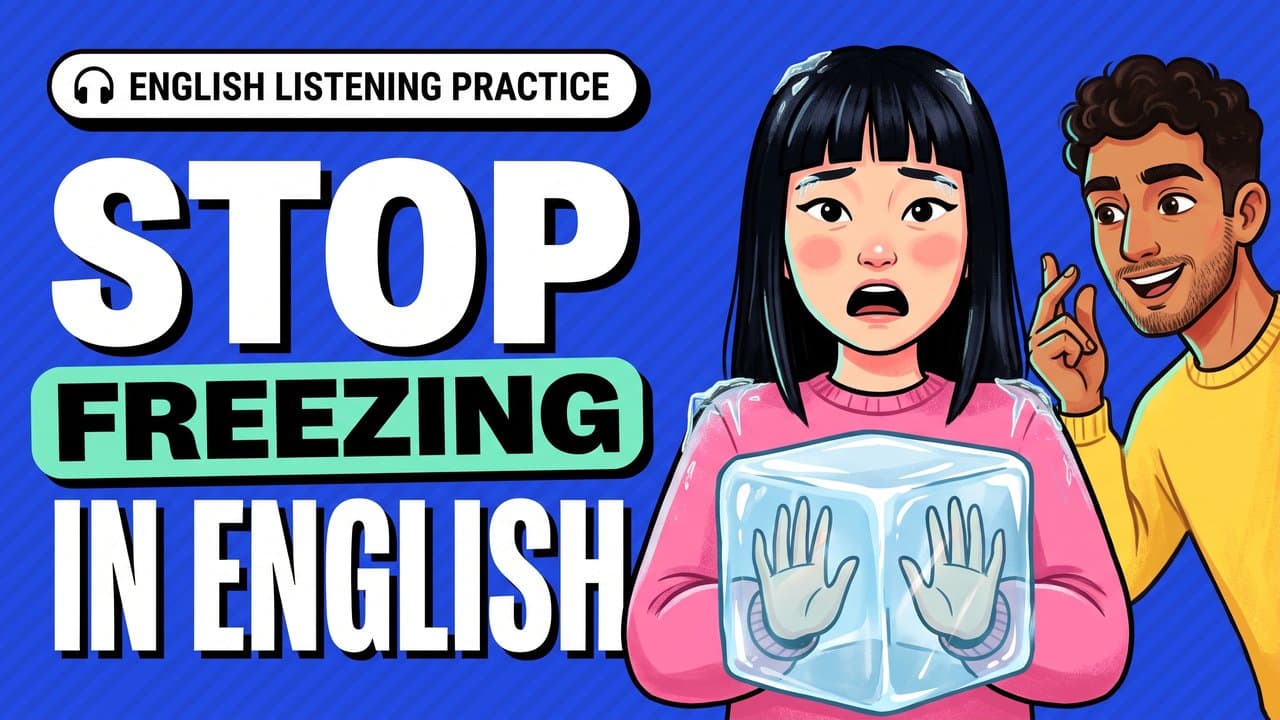
You understand English. You watch shows and follow podcasts. But when someone at a coffee shop asks you a simple question, your mind goes blank, and you hear yourself say "Yes" to a question that wasn't a yes or no question. Ten seconds later, outside the shop, you know every word you needed. Sound familiar?
In this episode of Real English with Nina and Max, two friends talk about why so many learners can understand English but can't speak it. They look at the moments everyone knows: the coffee shop, the meeting where your opinion goes home with you, the phone call with two seconds of silence, and the party question "So what do you do?"
Max has a strong opinion: most people don't need more words. Nina doesn't agree. To explain the difference between understanding and speaking, Max asks her to draw a good friend's face without looking at a photo. Then they try a coffee shop role-play, and Nina finds three small lines that keep you talking when you're stuck. And when Nina asks Max about his weekend, she catches him doing exactly the thing they were talking about.
By the end, they have one simple habit you can try today: steal a line. Take a sentence you understood, change one word so it's about your life, and say it.
This is a natural English conversation, not a lesson. Nina and Max speak clear American English at a comfortable speed, with English subtitles in the video. It is good listening and speaking practice if you understand much more than you can say.
You will hear phrases people really use when they need a second to think: my mind went blank, it's on the tip of my tongue, what's the word for…, let me think for a second, let me put it another way, I'm out of practice, and put it into words. Each one comes back several times, in different situations.
After you watch, try the free exercises on this page. Answer questions about the conversation, build sentences from it and match each phrase with its meaning. Then turn over the phrase cards to remember them.